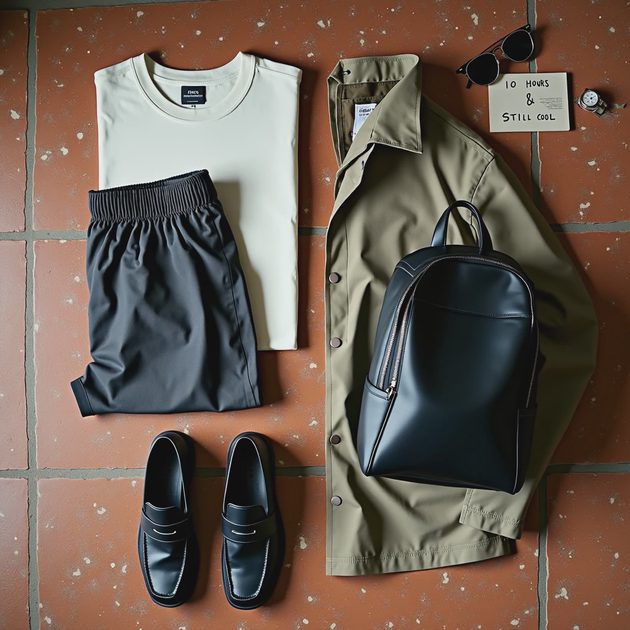
The airport outfit is the hardest working look in your wardrobe. It has to survive security, temperature swings from stuffy terminal to freezing cabin, hours of sitting in a seat designed by someone who has apparently never met a human spine, and the inevitable moment when your friend snaps a photo of you dragging your carry-on through the departures hall. The outfit has to be comfortable enough for a 10-hour flight and photogenic enough that you don't wince when you see the picture later.
This is a tall order. But the forum has spent enough time in airports to know what works, what wrinkles, what photographs well, and what you'll regret wearing by hour three. Here's how to build an airport outfit that does both jobs — comfort and cool — without compromise.
The three-fabric rule — what touches your skin matters most
On a long-haul flight, the fabric next to your skin is the single most important decision you'll make. Choose wrong, and you'll spend 10 hours feeling sticky, wrinkled, overheated, or chilled — sometimes all four in sequence.
The forum's three-fabric rule for airport dressing: your base layer should be natural, breathable, and wrinkle-resistant — or at least wrinkle-forgiving.
Cotton jersey in a heavier weight is the workhorse. It breathes, it moves with you, it doesn't hold odor, and if it wrinkles, the wrinkles tend to soften with body heat rather than setting into permanent creases. A heavyweight cotton tee or a fine-gauge cotton sweatshirt is an ideal base.
Merino wool or merino blends are the upgrade option. They regulate temperature better than cotton, resist odor for longer, and drape beautifully even after hours of sitting. A thin merino crewneck or cardigan is worth the investment if you fly frequently.
What to avoid: polyester-heavy fabrics that trap heat and feel clammy against the skin after a few hours; viscose or rayon that wrinkles deeply and visibly; anything with a high spandex content that feels restrictive when you're trying to sleep sitting up. Your skin will thank you for choosing wisely — and so will your photos, because wrinkled, sweaty fabrics don't photograph well no matter how good the rest of the outfit is.
The layering system — adaptable to every microclimate
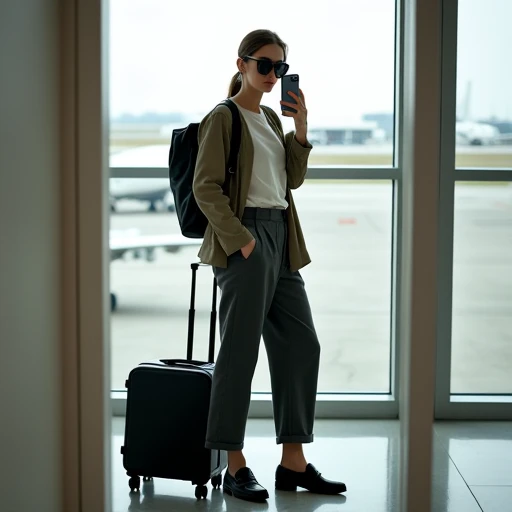
The temperature journey of a long-haul flight is chaotic. You're hot walking through the terminal with your bags. Then the air conditioning hits. Then you're on the plane and it's stuffy during boarding. Then the cabin cools down mid-flight. Then you land and it's either humid and warm or crisp and cold, depending on where you've arrived.
A single heavy layer can't handle this. You need a system.
Start with a breathable base layer — a tank, a tee, or a thin long-sleeve in cotton or merino. This is your temperature regulator. It's the piece you'll still be wearing if the cabin gets warm, so make it something that looks intentional on its own.
Add a mid-layer that's easy to take on and off. An open overshirt, a lightweight zip hoodie, a fine-gauge knit cardigan, a boxy denim or twill jacket. This layer should look good worn open over the base layer in departure-lounge photos, and also function as a blanket substitute when the cabin temperature drops. Avoid anything with complicated fastenings — you want to be able to remove it in a cramped seat without elbowing your neighbor.
The outer layer is optional but useful. A packable jacket that compresses into its own pocket, a lightweight trench that folds flat, a soft unstructured blazer that won't crease. This layer is for the destination — the airport arrival, the taxi queue, the walk from the car to wherever you're going. It doesn't need to be worn on the plane, but it should work with the rest of the outfit when you land.
The system should allow you to wear all three layers at once without bulk, and remove layers one by one as needed. If you can't move your arms comfortably with all layers on, there's too much fabric.
The pants that actually work — forgiving waistbands and clean silhouettes
Airport pants are the subject of more forum debate than almost any other travel item. The wrong pair can leave you with a deep elastic mark across your stomach and a resentment that lasts the whole flight. The right pair you'll forget you're wearing.
The forum consensus: a soft, wide-leg or straight-leg pant with a forgiving waistband — elasticated, drawstring, or a relaxed tailored fit with some give.
Dark colors are strategic. Black, charcoal, deep olive, navy. They hide any creases that develop, they don't show the coffee you will inevitably spill, and they look more intentional in photos than light grey sweats.
The fabric should be a cotton blend with some weight to it — enough to hold its shape but soft enough to feel like loungewear. Heavy jersey, soft cotton-twill, brushed-back fleece in a trouser cut rather than a sweatpant cut. The goal is pants that look like real trousers in photos but feel like sweatpants when you're curled against the window trying to sleep.
What to skip: anything with a rigid waistband and a front zipper that digs in when you sit; leggings that lose their shape after hours of wear; shorts that leave your bare legs touching the airplane seat (hygiene concern, not a style concern — but both apply); and white or cream pants that will show every mark from every surface you encounter between home and destination.
Footwear — security-friendly, comfortable, and not an eyesore in photos
Airport footwear has three jobs: get through security quickly, keep your feet comfortable for hours, and not ruin the outfit in photos. It's a lot to ask of one pair of shoes.
Slip-on shoes are non-negotiable for anyone who doesn't want to be that person frantically unlacing boots while the security line backs up. But "slip-on" doesn't have to mean flimsy.
The forum's top airport shoe picks: chunky-soled leather loafers that slip on but have enough visual weight to anchor an outfit; clean leather sneakers with elastic laces or easy slip-on access; polished combat boots with side zippers; and platform sandals with substantial straps for warm-weather departures. In every case, the shoe should have a real sole — something with cushioning and support, because airport terminals involve a surprising amount of walking.
Compression socks are the invisible airport essential. They're not stylish, but they're hidden under your pants and they genuinely reduce swelling and discomfort on long flights. The forum members who fly frequently don't debate this — they just wear them. Choose a black or dark neutral pair that blends with your pants and shoes, and no one will know except your ankles, which will be grateful.
The photo-ready details — what makes the difference in pictures
Airport photos have a specific aesthetic. The lighting is usually harsh fluorescent mixed with natural window light. The backdrop is busy — other travelers, signage, retail displays. Your outfit needs to read clearly in this chaotic visual environment, and a few small details can make the difference between a photo you post and a photo you delete.
Sunglasses are the single most useful airport accessory. They cover tired eyes, add instant polish, and make even the simplest outfit look intentional. Keep them on your head or in easy reach for the departures-hall photo.
A single structured outer layer worn open creates visual framing in photos — it gives the outfit a clear silhouette against the messy terminal background. A long coat, an open overshirt, a structured jacket. The layer should move well and catch some light.
Accessories should be minimal but present. A watch, a single necklace, small hoops. Not so much jewelry that security becomes a hassle, but enough to signal that you thought about the outfit.
Finally, consider the bag. Your carry-on will be in airport photos whether you like it or not. A sleek backpack in black or a neutral, a structured canvas tote, a compact weekender — choose one that complements the outfit rather than clashing with it. The bag is part of the look, not an interruption to it.
Travellers Write
No letters yet — be the first traveller to write.